
TL;DR:
- Technical SEO ensures ecommerce blogs are crawlable, indexable, and structured for search engine visibility. Proper management of canonical tags, sitemap strategies, and schema markup prevents duplicate content issues and boosts discoverability. Regular audits and structured planning protect rankings and optimize crawl budget for sustained organic growth.
Most ecommerce marketers put serious effort into their blog content and then wonder why it does not rank. The answer is usually not the writing. Understanding what is technical SEO for ecommerce blogs means recognizing that Google needs to crawl your content, interpret its structure, and confirm it deserves a spot in search results before a single reader clicks through. Technical SEO, the practice of optimizing your site's infrastructure for search engines, is the layer that makes all your content work possible. Skip it, and even well-written posts become invisible.
Table of Contents
- Key takeaways
- What is technical SEO for ecommerce blogs
- Challenges unique to ecommerce blogs
- Schema markup for ecommerce blogs
- Maintaining a healthy blog SEO infrastructure
- My honest take on ecommerce blog technical SEO
- How BlockPress handles this for you
- FAQ
Key takeaways
| Point | Details |
|---|---|
| Crawlability drives visibility | If Google cannot access your blog posts, your content will not rank regardless of quality. |
| Duplicate content is a real risk | Ecommerce blogs generate filter and tag URLs that dilute indexation without canonical management. |
| Schema markup boosts discoverability | Article and Breadcrumb schema help search engines surface your blog content as rich results. |
| Crawl budget matters at scale | Large stores must direct Googlebot toward high-value blog posts, not low-value parameter URLs. |
| Ongoing audits protect rankings | Regular checks of your sitemap, robots.txt, and Core Web Vitals prevent silent ranking drops. |
What is technical SEO for ecommerce blogs
Technical SEO is the discipline of configuring your website so search engines can efficiently find, crawl, index, and rank your pages. For ecommerce blogs specifically, this encompasses URL structure and content discoverability at scale. It is distinct from on-page SEO (your headings and keyword use) and off-page SEO (your backlinks). Think of it as the plumbing behind the walls. No one sees it, but everything breaks without it.
Here are the core components you need to understand:
- Crawlability and indexation. Googlebot must be able to reach your blog posts. Robots.txt controls crawling but does not prevent indexing. A noindex meta directive is what actually stops a page from appearing in search results. Confuse the two and low-value URLs end up indexed unintentionally.
- Canonical tags. When your blog generates multiple versions of similar URLs (think category pages, tag archives, or filtered views), canonical tags tell Google which version is the original. Without them, you split ranking signals across duplicates.
- Sitemap strategy. A single sitemap supports up to 50,000 URLs maximum. Larger stores should use a sitemap index file. Submit it through Google Search Console and confirm it does not conflict with your robots.txt.
- Core Web Vitals. Google uses LCP, INP, and CLS scores as ranking signals. For ecommerce blogs loaded with product images and embeds, these metrics require active management.
- Mobile optimization. Google crawls the mobile version of your site first. A blog post that looks fine on desktop but loads slowly on mobile is an SEO liability.
Pro Tip: Check your blog posts in Google Search Console under "URL Inspection" to confirm they are indexed and to catch any crawl errors before they compound.
Challenges unique to ecommerce blogs
Running a blog on an ecommerce platform creates technical complexity that a standalone blog never faces. Here are the four biggest challenges to address:
-
Faceted navigation and filter URLs. Ecommerce blogs often use tags, categories, and filters to organize content. Each combination can generate a unique URL. Improper canonical tags and noindex directives on these variant URLs lead to hundreds of low-value pages competing with your real posts for crawl attention and ranking signals.
-
Pagination handling. Multi-page blog archives create duplicate or thin content problems if not managed properly. The standard approach is to ensure each paginated page is crawlable, uses self-referencing canonicals, and that internal linking points users and crawlers toward the most relevant posts rather than generic page-two archive pages.
-
Product lifecycle content. Ecommerce blogs frequently publish content tied to specific products: gift guides, how-to posts, seasonal roundups. When products go out of stock or get discontinued, those posts become orphaned. You need a process to update, redirect, or consolidate this content before it becomes a dead weight on your crawl budget and user experience.
-
Crawl budget allocation. Googlebot has finite crawl capacity, and large ecommerce stores burn through it fast. Thousands of filter URLs, search result pages, and session parameters compete with your blog posts for crawl time. Protecting your blog's crawl allocation means actively blocking low-value URL patterns in robots.txt and consolidating duplicate paths with canonicals.
Pagination, filters, and search URLs require a governance plan that balances crawl efficiency with link equity distribution. Without one, your best-written posts may simply never get crawled consistently.
Schema markup for ecommerce blogs
Structured data is how you tell Google exactly what a page contains, rather than leaving it to guess. For ecommerce blogs, schema markup offers specific advantages that go beyond standard blog optimization.
- Article schema. Applying Article or BlogPosting schema to your posts signals content type, author, publish date, and topic. This supports eligibility for rich results like article carousels in Google Discover and news results.
- Breadcrumb schema. Breadcrumb structured data clarifies your blog's hierarchy to Google. A post nested under /blog/skincare/moisturizers becomes far more contextually understood when Breadcrumb schema reflects that path. Product, Breadcrumb, and Article schema consistently improve SEO performance for ecommerce content.
- Product schema integration. When a blog post features or reviews a specific product, adding Product schema to that content helps Google connect your editorial content with transactional intent. This can lift a post's relevance for purchase-related queries.
- Validation. Schema errors do not just waste markup effort. They can trigger manual penalties or suppress rich result eligibility. Use Google's Rich Results Test after any schema update.
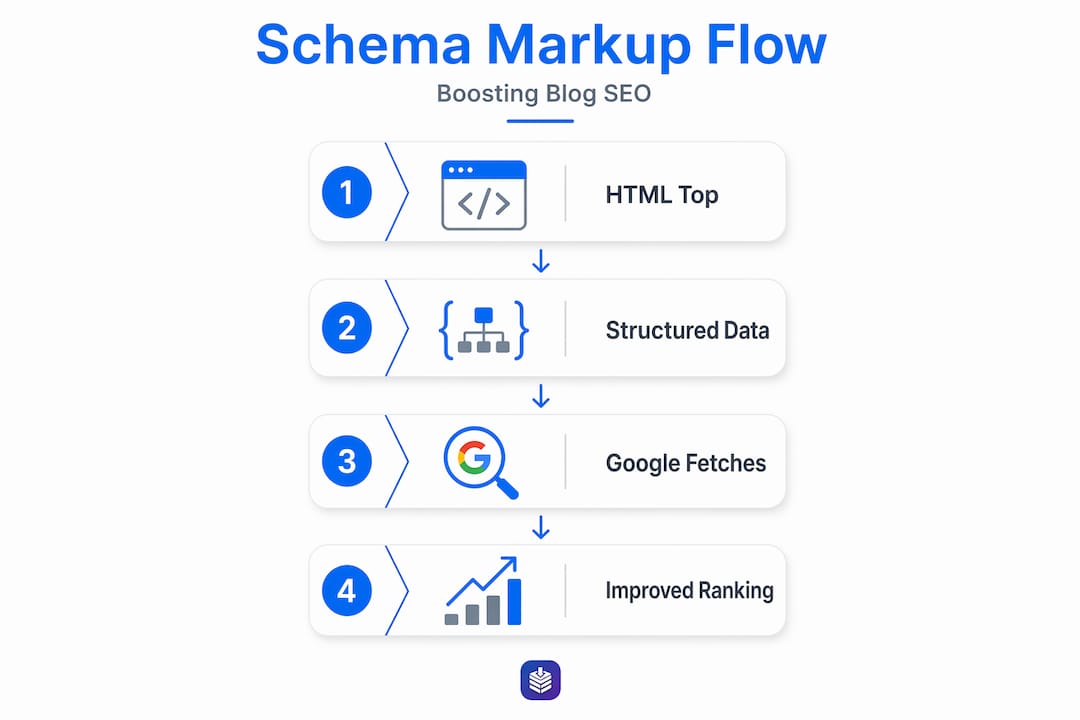
Pro Tip: Place your structured data high in the HTML. Google fetches only 2MB per URL, so schema buried at the bottom of a page template risks being cut off before it is processed.
Maintaining a healthy blog SEO infrastructure

Technical SEO is not a one-time setup. It requires regular attention, especially as your store grows and your blog scales. The table below shows what to monitor versus what to fix when issues arise.
| Area | Regular monitoring | Fix when broken |
|---|---|---|
| Google Search Console | Weekly coverage and index reports | Crawl errors, noindex conflicts, sitemap warnings |
| Robots.txt and sitemap | Monthly review for conflicting directives | Accidentally blocked blog directories |
| Core Web Vitals | Monthly CrUX data check | LCP above 2.5s, CLS above 0.1, INP above 200ms |
| JavaScript rendering | Quarterly render audit | Googlebot seeing different content than users |
| URL redirects | After any content restructure | Redirect chains, broken internal links |
JavaScript-heavy blog templates create a particularly tricky problem: Googlebot may crawl a page but not fully render it, leading to partial indexing where your content exists in the database but not in search results. If your Shopify theme loads blog content via JavaScript after the initial page response, test it with Google's URL Inspection tool to confirm what Google actually sees.
One area many stores overlook is planning redirects proactively. When you rename a blog post's URL, restructure categories, or consolidate old content, technical and schema fixes show results within four to six months. Broken redirect chains from poor URL management erase that progress fast.
My honest take on ecommerce blog technical SEO
I have reviewed a lot of ecommerce stores where the blog gets treated as a content afterthought. Great articles, zero technical governance. And the traffic reflects it.
What I've found consistently is that marketers underestimate how much technical mismanagement directly impacts revenue. It is not just about rankings. When Google wastes crawl budget on 400 tag archive URLs that nobody searches for, your actual product guides and how-to posts sit in a crawl queue for weeks.
The other mistake I see is treating technical SEO as a one-time audit rather than a living system. Your blog grows. Products change. URLs accumulate. The stores that win at organic search are the ones running monthly crawl checks, not the ones who did a "full SEO audit" two years ago and called it done.
My honest recommendation: fix the crawl and indexation layer before you publish another post. Good content on a broken technical foundation is a slow loss.
— Rodney
How BlockPress handles this for you
Fixing technical SEO manually across a growing Shopify blog is genuinely time-consuming. BlockPress is an AI-native blog editor built directly into Shopify that takes the complexity out of the process. It provides live SEO and UX scoring, real Google keyword data, article health audits, and per-article performance analytics, all inside one editor without leaving your store.
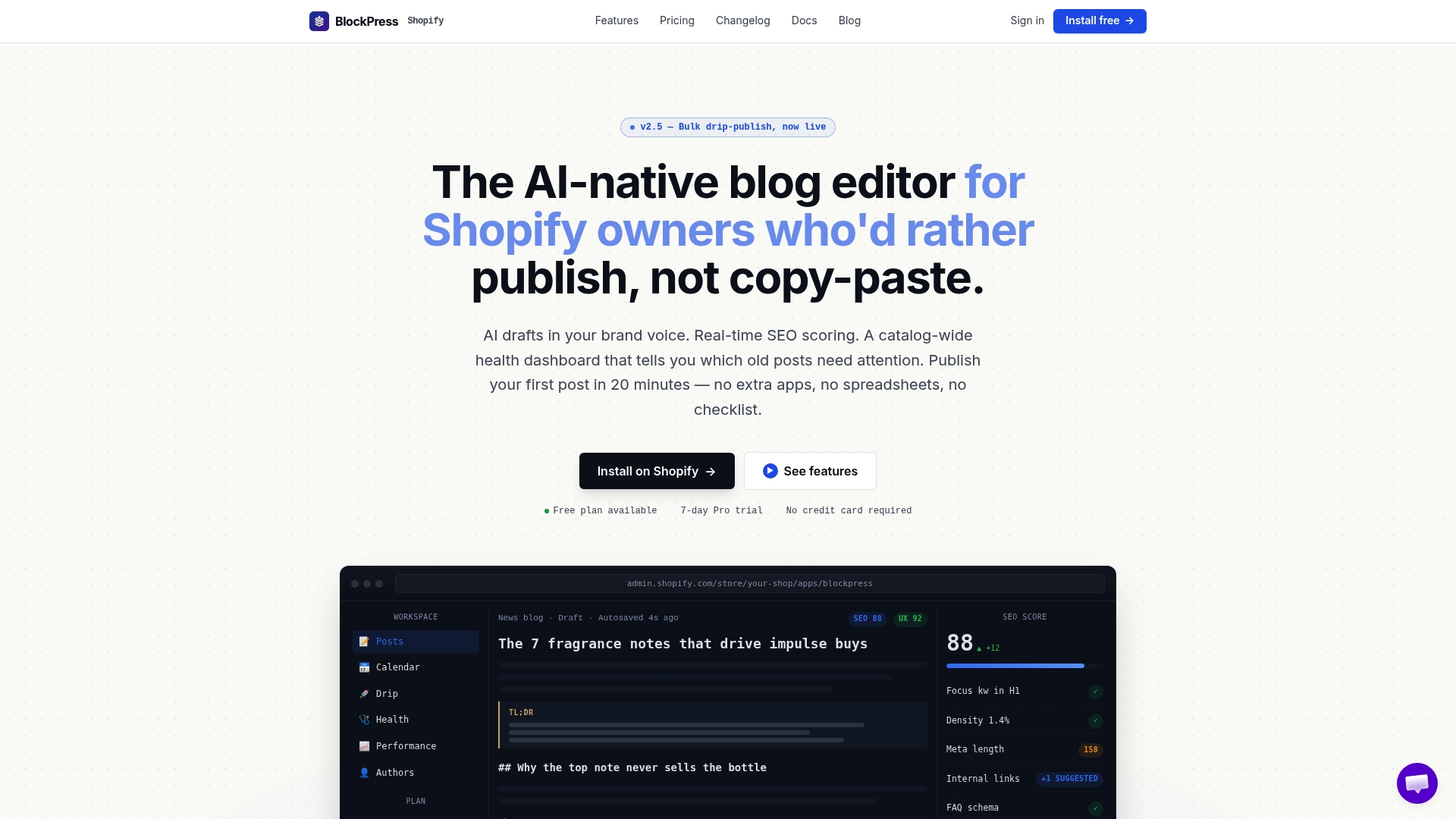
Where BlockPress earns its keep technically: it manages the structural and SEO-critical elements that Shopify's default editor skips entirely. You get clean URL handling, schema support, and bulk publishing controls that protect your crawl budget as your blog scales. Check the full feature set to see exactly what is covered. If you want to compare plans before committing, BlockPress pricing is straightforward with no hidden setup costs.
FAQ
What is technical SEO for ecommerce blogs?
Technical SEO for ecommerce blogs refers to optimizing the infrastructure of your blog so search engines can crawl, index, and rank posts correctly. It covers URL structure, canonical tags, schema markup, Core Web Vitals, and crawl budget management.
Why does crawl budget matter for ecommerce blogs?
Googlebot's crawl capacity is finite, and large ecommerce stores generate thousands of low-value URLs from filters and tags. Without controls, these URLs consume crawl budget that should go to your blog posts and product pages.
How does schema markup help ecommerce blog content?
Article, Breadcrumb, and Product schema help Google understand the context and structure of your blog posts, which improves indexation accuracy and eligibility for rich results like carousels and article features.
How often should you audit your ecommerce blog's technical SEO?
A monthly review of Google Search Console coverage reports, Core Web Vitals, and your sitemap catches most issues before they affect rankings. Run a deeper crawl audit quarterly or after any significant site restructure.
How long does it take to see results from technical SEO fixes?
Technical and schema improvements typically show measurable results within four to six months. Content-focused strategies compound over a longer horizon of six to twelve months.