
TL;DR:
- Local SEO enables online stores to target local searchers through city-specific pages, citations, reviews, and schema markup, increasing visibility and conversions. Even online-only businesses can rank locally by creating dedicated landing pages and service-area Google Business Profiles for high-intent queries. Maintaining consistent NAP data, active review management, and optimized BOPIS pages fuels sustained growth and higher local conversion rates.
Local SEO for online stores is the practice of optimizing your e-commerce site to appear in location-based search results, targeting shoppers who search with geographic intent like "buy running shoes near me" or "same-day delivery Chicago." The industry term is local search optimization, and it applies to far more than brick-and-mortar shops. Geo-modified keywords and location-specific pages help any online store capture high-intent buyers in specific cities or regions. With 80% of US consumers searching online for local businesses weekly, ignoring local SEO means leaving a significant share of ready-to-buy traffic on the table.
What is local SEO for online stores, and what does it include?
Local SEO for e-commerce is built on five core components that work together to signal geographic relevance to Google. Understanding each one helps you prioritize where to invest your time.
- Google Business Profile (GBP): Your GBP listing is the single most visible local SEO asset you control. Google ranks local results based on relevance, distance, and prominence, and a complete, verified profile directly feeds all three signals. Add your service areas, product categories, hours, and photos.
- Location-specific landing pages: Generic product pages do not rank for local queries. Pages built around phrases like "order furniture online in Austin" or "ship to Denver same day" give Google a clear geographic signal and give shoppers a relevant destination.
- Local citations and NAP consistency: Citations are mentions of your business Name, Address, and Phone number across directories like Yelp, Facebook, and Google. Inconsistent NAP data confuses Google and suppresses your local rankings.
- Review management: Review recency and velocity influence local rankings more than total count alone. Google removed 40% more reviews in 2024 than in 2023, which means quality and freshness matter more than ever.
- Structured data and schema markup: LocalBusiness schema tells Google exactly what your store does, where it operates, and what it sells. This markup supports rich results and strengthens your Local Pack eligibility.
Pro Tip: Set a monthly calendar reminder to respond to every new review, positive or negative. Google treats owner responses as an engagement signal, and shoppers read them before deciding to buy.
How can online-only stores benefit from local SEO?
Online-only businesses can rank locally without a physical storefront by targeting city and region-specific content. The misconception that local SEO requires a physical address stops many e-commerce owners from pursuing a channel that their competitors are already using. Here is a practical approach:
- Create location-specific landing pages. Build a dedicated page for each city or region you serve. Target queries like "organic skincare delivered to Portland" or "custom gifts shipped to Nashville." These pages rank for local intent searches that your homepage never will.
- Set up a service-area Google Business Profile. Google allows businesses without a public address to define service areas by city, county, or zip code. This makes you eligible for Local Pack results in those areas.
- Use geo-intent keywords in product descriptions and meta data. Phrases like "available for next-day delivery in Seattle" embedded in your product copy and meta descriptions signal local relevance without requiring a physical location.
- Build local backlinks. Getting mentioned by local bloggers, city-specific news sites, or regional business directories builds geographic authority. A single link from a Dallas lifestyle blog carries more local weight than ten generic directory listings.
- Publish location-focused content. Blog posts like "Best eco-friendly gifts to ship in the Bay Area" attract local organic traffic and support your landing pages with topical depth.
Pro Tip: Do not build one generic "locations served" page and list 50 cities. Google reads that as thin content. Build individual pages, each with at least 300 words of unique, location-specific copy.
What local SEO strategies work best for BOPIS and warehouse-based stores?
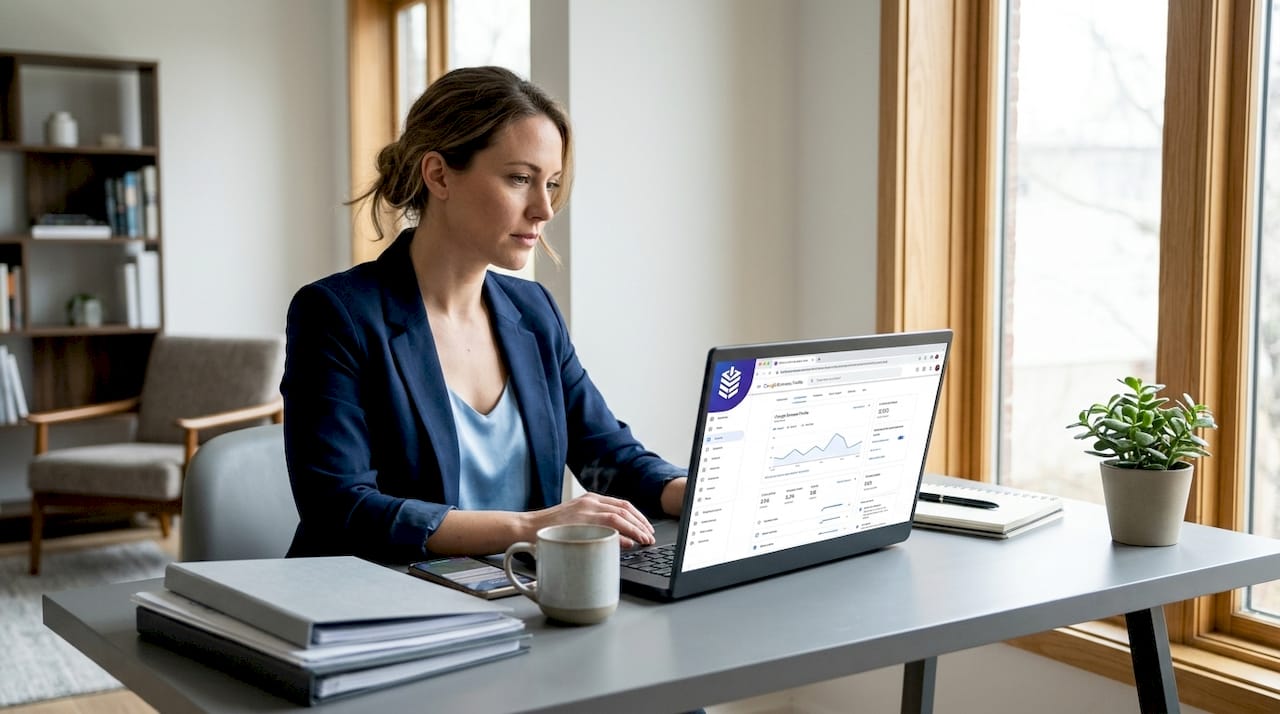
Buy Online Pickup In Store (BOPIS) is one of the strongest local SEO levers available to e-commerce businesses with fulfillment centers or retail partners. BOPIS landing pages with detailed pickup information, store hours, locations, and real-time inventory data directly improve both local rankings and conversion rates.
| BOPIS SEO tactic | What it does |
|---|---|
| Dedicated pickup location pages | Targets "pickup today in [city]" queries with location-specific content |
| BOPIS schema markup | Signals pickup availability to Google for rich result eligibility |
| Real-time inventory integration | Reduces bounce rate by showing shoppers what is available before they visit |
| Geo-targeted ad alignment | Matches paid and organic local signals for stronger overall prominence |
Beyond the table above, aligning your GBP listing for each pickup location with accurate hours and inventory categories is non-negotiable. Google's Local Pack ranking algorithm weights profile completeness and NAP consistency heavily for multi-location businesses. If you operate three warehouses, each one needs its own verified GBP listing with location-specific content, not a single corporate profile covering all three.
Keyword targeting for BOPIS queries follows a predictable pattern. Phrases like "buy online pick up today [city]," "curbside pickup [product] [city]," and "same-day pickup [category] near me" represent high-converting, low-competition opportunities that most e-commerce stores ignore entirely.
What are the measurable benefits of local SEO for online stores?
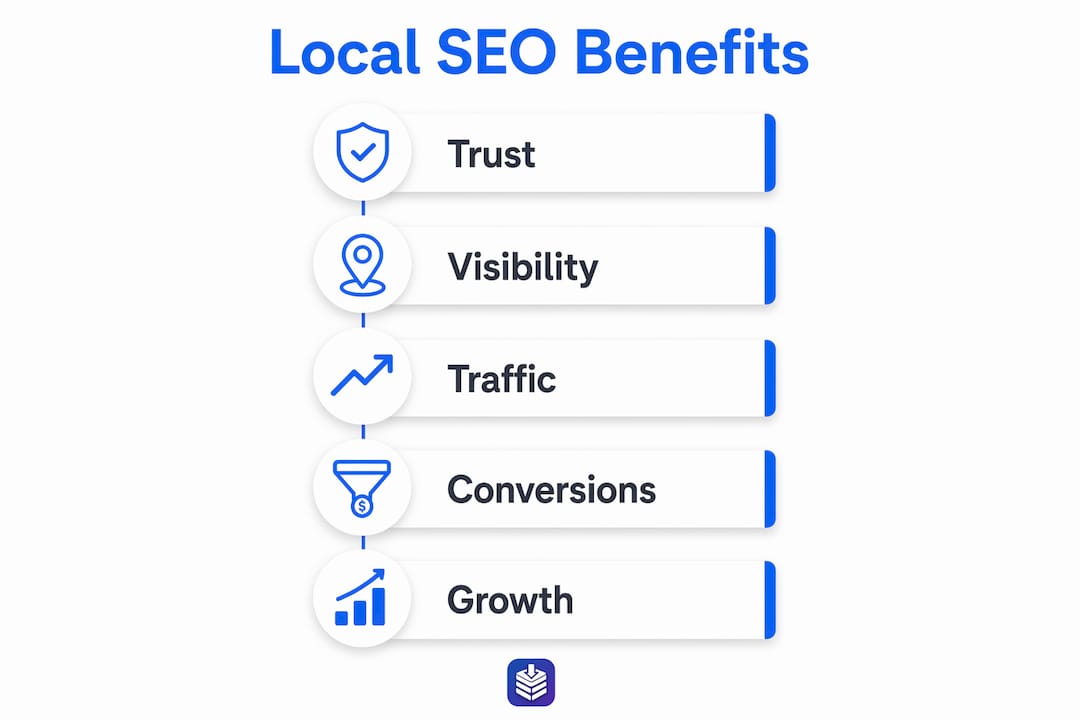
The benefits of local SEO concentrate in one area: conversion quality. Local searchers are closer to a purchase decision than broad organic visitors. A shopper searching "standing desk delivered to Brooklyn this week" has already decided to buy. Your job is simply to appear.
"Local search visibility significantly improves conversion potential compared to broad SEO targeting." — BrightLocal
Local SEO strategies for e-commerce build trust through three compounding effects. Reviews and local citations establish credibility with new shoppers. Location-specific content signals relevance to Google. And consistent NAP data across Yelp, Facebook, and Google prevents the ranking suppression that comes from conflicting business information. Together, these factors push your store into the Local Pack, where click-through rates significantly outperform standard organic results. Local SEO also supports multi-channel growth. Stores that rank locally online see increases in phone inquiries, direction requests, and in-store visits, not just web traffic.
How to start and maintain a local SEO program for your store
Getting local SEO right is a process, not a one-time setup. Consistent NAP data and fresh reviews prevent local ranking decay over time. Here is how to build a program that holds up:
- Conduct geo-targeted keyword research. Use tools like Google Search Console or Google Keyword Planner to find location-modified queries your customers actually use. Filter by city, region, or zip code to find gaps your competitors have not filled.
- Build and verify citations. Submit your business information to Yelp, Facebook, Bing Places, Apple Maps, and industry-specific directories. Use the exact same NAP format across every listing.
- Generate reviews systematically. Send post-purchase emails asking for Google reviews. Make it a process tied to your order fulfillment workflow, not a one-off campaign. Review acquisition and monitoring must be continuous to maintain ranking momentum.
- Build scalable location landing pages. Create a content architecture where each city or region gets its own page. Link these pages from your main navigation or a "locations served" hub page to pass authority through your site structure.
- Monitor and adapt. Track rankings for your geo-modified keywords monthly. Watch for algorithm updates that affect local results and adjust your GBP and on-page content accordingly.
Pro Tip: Pair your location landing pages with SEO-optimized blog content that targets local informational queries. A page selling products in Denver performs better when supported by blog posts answering Denver-specific buyer questions.
Key takeaways
Local SEO for online stores requires location-specific pages, consistent citations, active review management, and structured data to capture high-intent local buyers and outrank competitors in Google's Local Pack.
| Point | Details |
|---|---|
| Local SEO applies to all stores | Online-only stores can rank locally using service-area GBPs and city-specific landing pages. |
| Five core components | GBP, location pages, citations, reviews, and schema markup form the foundation of any local SEO strategy. |
| BOPIS amplifies local signals | Dedicated pickup pages with schema markup and real-time inventory target high-converting "pickup today" queries. |
| Reviews need ongoing attention | Review recency and velocity matter more than total count; treat acquisition as a continuous system. |
| Local SEO drives conversion quality | Local searchers have higher purchase intent than broad organic visitors, making local traffic more valuable per click. |
Why most online stores are sleeping on local SEO
I have worked with enough Shopify merchants to know that local SEO is the most consistently underestimated growth channel in e-commerce. Store owners assume it is only for restaurants and dentists. That assumption hands their competitors a clear advantage.
The stores I have seen win with local SEO share one habit: they treat reviews and citations as systems, not tasks. They set up automated post-purchase review requests through their email flows. They audit their NAP consistency across directories every quarter. They build location pages before they need them, not after a competitor already owns the ranking.
The other mistake I see constantly is building one "we ship everywhere" page and calling it a local SEO strategy. That page ranks for nothing. The stores that win build individual pages for their top 10 delivery cities, each with unique copy, local testimonials, and geo-modified product descriptions. It takes more work upfront, but the compounding traffic is worth it. Pairing that architecture with a solid content and SEO strategy is what separates stores that grow organically from those that stay dependent on paid ads.
— Rodney
Build your local SEO content faster with BlockPress
Creating location-specific landing pages and geo-targeted blog content is the most time-consuming part of any local SEO program. BlockPress removes that bottleneck for Shopify merchants.
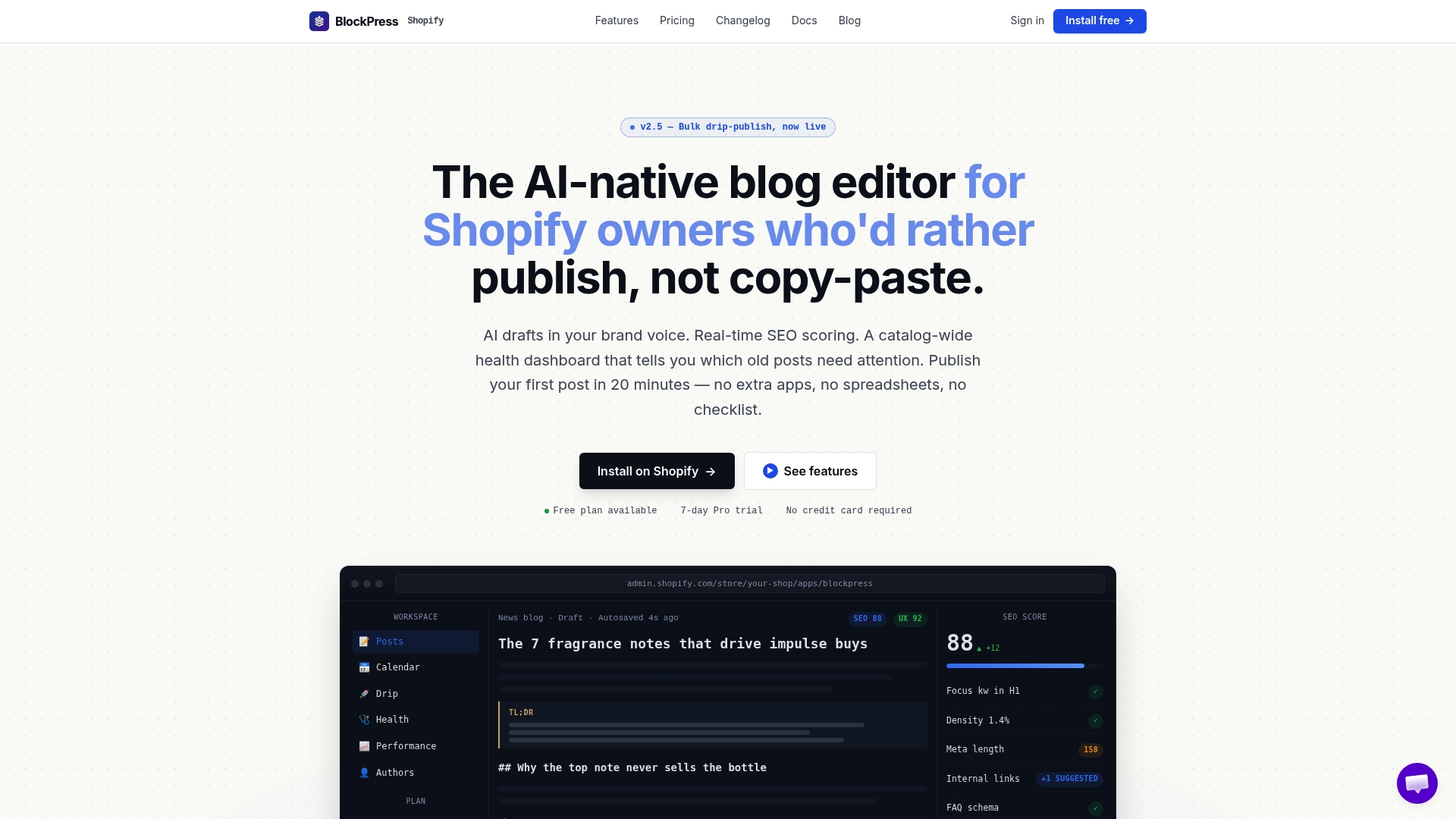
BlockPress is an AI-native blog editor built directly into Shopify. It gives you real Google keyword data, live SEO scoring, and AI-generated article drafts without switching between apps. You can build location-specific content, check your on-page SEO in real time, and publish at scale using bulk drip-publishing. For stores running a local SEO program across multiple cities or service areas, the full feature set replaces three separate tools most merchants currently use. Start producing local content that actually ranks, directly from your Shopify dashboard.
FAQ
What is local SEO for online stores?
Local SEO for online stores is the process of optimizing your e-commerce site to appear in location-based search results for shoppers in specific cities or regions. It includes Google Business Profile optimization, location-specific landing pages, local citations, reviews, and schema markup.
Do online-only stores need a physical address for local SEO?
No. Online-only businesses can set up service-area Google Business Profiles and create city-specific landing pages to rank locally without a storefront or public address.
How does Google decide which local stores rank in the Local Pack?
Google ranks Local Pack results based on relevance, distance, and prominence. Prominence is driven by review volume and recency, citation consistency, and overall online visibility.
How often should I update my local SEO strategy?
Citations and reviews require ongoing management, not one-time setup. Audit your NAP consistency quarterly, generate reviews continuously, and refresh location page content whenever your inventory or service areas change.
What is BOPIS and why does it matter for local SEO?
BOPIS stands for Buy Online Pickup In Store. Stores with pickup options can build dedicated BOPIS landing pages with schema markup and real-time inventory data, targeting high-converting queries like "pickup today in [city]" that standard product pages miss entirely.