

TL;DR:
- Author credibility enhances Google rankings, reader trust, and conversion rates by showcasing verified expertise and structured author signals. Implementing dedicated author pages, schema markup, and transparent bios transforms store blogs into authoritative content sources that attract backlinks and foster customer loyalty. Consistently updating author profiles and leveraging tools like Blockpress simplify building and maintaining a trustworthy authorship framework.
Author credibility is the measurable trust signal that tells Google, AI search systems, and real shoppers whether your blog content deserves attention. For Shopify store owners, the author credibility benefits for store blogs go well beyond a simple byline. Credible authorship directly strengthens Google's E-E-A-T framework, which evaluates Experience, Expertise, Authoritativeness, and Trustworthiness across every piece of content you publish. Tools like Schema.org author markup, structured author bio pages, and JSON-LD identity signals are the technical backbone of this trust layer. Get it right and you improve rankings, engagement, and conversions at the same time.
1. What author credibility means for store blog authority
Author credibility in ecommerce blogging is defined by three components: identifiable authorship, verifiable credentials, and transparent bios. A post signed "Admin" or "Store Team" carries none of these. A post attributed to a named skincare formulator with a linked bio page, a published product review history, and a Schema.org Person markup carries all three.

Google's Search Quality Rater Guidelines treat identifiable authorship as a core trust signal, particularly for content that influences purchase decisions. This matters most for store blogs because product advice, ingredient explanations, and how-to guides all fall into what Google calls YMYL (Your Money or Your Life) territory. The bar for trust is higher here than on a general lifestyle blog.
The key components of author credibility include:
- Full name and professional title tied to the content category
- A dedicated author page with a bio, credentials, and a list of published articles
- Schema.org Person markup with sameAs links to LinkedIn, social profiles, or press mentions
- Verifiable evidence in the content itself: product tests, case studies, first-hand experience
- Transparency signals such as an About page, contact information, and visible update dates
2. Higher Google trust and improved search rankings
Google's E-E-A-T evaluation rewards content where the author's expertise is demonstrably connected to the topic. Professional bios with qualifications and external links on author pages directly improve trust scores for ecommerce blogs. This translates into better rankings for competitive product-adjacent keywords, where generic store content typically struggles.
The practical implication is straightforward. A Shopify store selling supplements that attributes blog posts to a registered dietitian with a linked credential page will outrank an identical post attributed to no one. The content may be word-for-word the same. The author signal is the differentiator. Understanding how Google ranks ecommerce blog posts in 2026 makes this dynamic very clear.
3. Increased user engagement and return visits
Readers return to sources they trust. When a shopper lands on your blog and sees a named author with a photo, a short credential summary, and a link to more articles by that person, they are more likely to read the full post, click to related content, and come back next week. Anonymous content produces the opposite effect.
This is not a soft benefit. Author trust signals increase conversion by up to 42% and reduce cart abandonment, according to 2026 ecommerce SEO data. That figure reflects the compounding effect of trust across the entire shopping session, not just the blog visit. A reader who trusts your content author is primed to trust your product pages.
Pro Tip: Add a short "Why trust this author?" line directly under the byline on each blog post. One sentence citing a specific credential or experience beats a generic bio every time.
4. More backlinks and stronger domain authority
Credible authors attract links that anonymous content never will. Journalists, bloggers, and industry publications link to named experts, not to store blogs with no clear authorship. Transparent expert bios increase outreach response rates and build quality backlink profiles, which compounds your domain authority over time.
The mechanism is simple. When you pitch a guest post or a quote to a trade publication, a verifiable author page with a consistent identity gives the editor confidence. Without it, your pitch looks like promotional content from a store account. With it, you look like a subject matter expert who happens to run a store.
5. Better conversion rates from content-driven traffic
Blog readers who arrive through organic search are already in research mode. When the content they find is attributed to a credible, named author with demonstrated expertise, their confidence in the store's products rises before they ever reach a product page. This is the direct impact of credibility on sales.
E-E-A-T trust signals also improve organic traffic by 23% for stores that implement them consistently. More traffic plus higher trust equals a measurable lift in revenue from blog-driven sessions. The technical SEO implementation of author markup is a key part of capturing this benefit.
6. Protection from the AI content credibility gap
AI-generated content is flooding search results in 2026. Google's quality raters are specifically trained to identify content where the claimed author has no demonstrable connection to the topic. Fake or vague author bios without genuine connection to content are easily detected and harm both credibility and SEO performance.
Authentic human authorship is your competitive moat. A store blog where real team members, product developers, or industry consultants write under their own names is structurally harder to replicate than a blog full of AI-generated posts with placeholder bylines. Specificity and auditable evidence in the content itself are what separate credible from performative authorship.
7. Long-term brand reputation and customer loyalty
E-E-A-T trust signals built into your content templates, internal linking, and site-wide trust pages create compounding SEO sustainability. This is not a one-post fix. It is a site architecture decision. Stores that treat author identity as a persistent entity, with stable author page URLs and consistent name spellings across all content, build a reputation that survives algorithm updates.
Customers who follow a specific author across multiple posts develop a relationship with your brand that goes beyond a single transaction. That relationship is the foundation of repeat purchases, word-of-mouth referrals, and higher lifetime customer value.
How to build and showcase author credibility effectively
The tactics below move you from anonymous store blog to credible content destination. Each one addresses a specific signal that search engines and readers evaluate.
- Create dedicated author pages with a full name, professional bio, headshot, credentials, and a list of published articles on your store blog.
- Implement Schema.org Person markup using JSON-LD. Include sameAs links to LinkedIn, Twitter/X, or any external profile where the author has a verified presence. Person schema markup connects your blog content to a machine-readable author identity that AI-powered search systems recognize.
- Link every article to its author page using a consistent byline format. Never use generic labels like "Staff Writer" or "Admin" as the only attribution.
- Include verifiable evidence inside the post itself: product test results, before-and-after data, first-hand experience with the subject matter. The author bio and the content must align. Credibility failures happen most often when the claimed expertise is not demonstrated in the article.
- Use stable author page URLs and consistent name spellings across all content. Reference the same Person @id in schema markup across all posts to build a coherent author entity.
- Add disclosure statements and update dates to author pages and articles. This aligns with editorial transparency standards and minimizes trust collapse risk even when content volume scales.
Pro Tip: Connect your author pages to your About page and link them from your site footer. This creates a site-wide trust architecture that quality raters can follow in under two clicks.
Comparing author credibility tactics by impact
| Tactic | SEO impact | User trust | Implementation effort |
|---|---|---|---|
| Basic byline (name only) | Low | Low | Minimal |
| Detailed author page with bio and credentials | High | High | Moderate |
| Schema.org Person markup with sameAs links | High | Medium | Moderate |
| External validation (guest posts, press mentions) | Very high | Very high | High |
| Transparency signals (About page, contact info, update dates) | Medium | High | Low |
The table above makes one thing clear: a detailed author page with Schema.org markup delivers the best return on effort. External validation amplifies those gains but requires ongoing outreach. Transparency signals are low-effort and should be in place before any other tactic. The Shopify blog SEO checklist covers how to layer these signals into every post you publish.
Key takeaways
Author credibility builds store blog authority by combining identifiable authorship, verifiable credentials, and structured data signals that both Google and readers use to judge content quality.
| Point | Details |
|---|---|
| E-E-A-T is the framework | Google evaluates author identity as a core trust signal for content affecting purchase decisions. |
| Author pages drive rankings | Detailed bios with credentials and Schema.org markup improve search visibility more than content quality alone. |
| Trust converts shoppers | Author trust signals increase conversion rates by up to 42% and reduce cart abandonment. |
| Authenticity beats volume | Verifiable, first-hand expertise in the content itself is more effective than lengthy but vague bios. |
| Stable author entities compound | Consistent author URLs and schema @id references build long-term domain authority across algorithm updates. |
Why most store blogs get author credibility backwards
I've reviewed hundreds of Shopify store blogs, and the same mistake appears constantly. Store owners invest in content quality but treat authorship as an afterthought. They write genuinely useful posts and then attribute them to "The [Brand] Team." That single decision erases most of the SEO value they just created.
The counterintuitive insight is that specificity matters more than length. A two-sentence bio that says "Sarah Chen is a certified aromatherapist with 8 years of formulation experience and has tested every product in this line" outperforms a 300-word bio that lists vague accomplishments. Google's quality raters are looking for a truthful, auditable connection between the author and the content. Shoppers are looking for a reason to trust the advice before they buy.
The other mistake I see is treating author credibility as a one-time setup task. Author pages need update dates, new credentials as they are earned, and fresh links to recent articles. An author page last updated in 2023 signals neglect, not expertise. Build an editorial calendar that includes author page reviews at least twice a year.
The stores that get this right treat their authors as brand assets, not just content producers. That shift in thinking changes everything from how you brief writers to how you structure your site architecture.
— Rodney
How Blockpress makes author credibility easier to implement
Building author credibility on Shopify used to mean juggling a blog editor, a separate SEO app, and a developer to handle Schema.org markup. Blockpress eliminates that friction entirely.
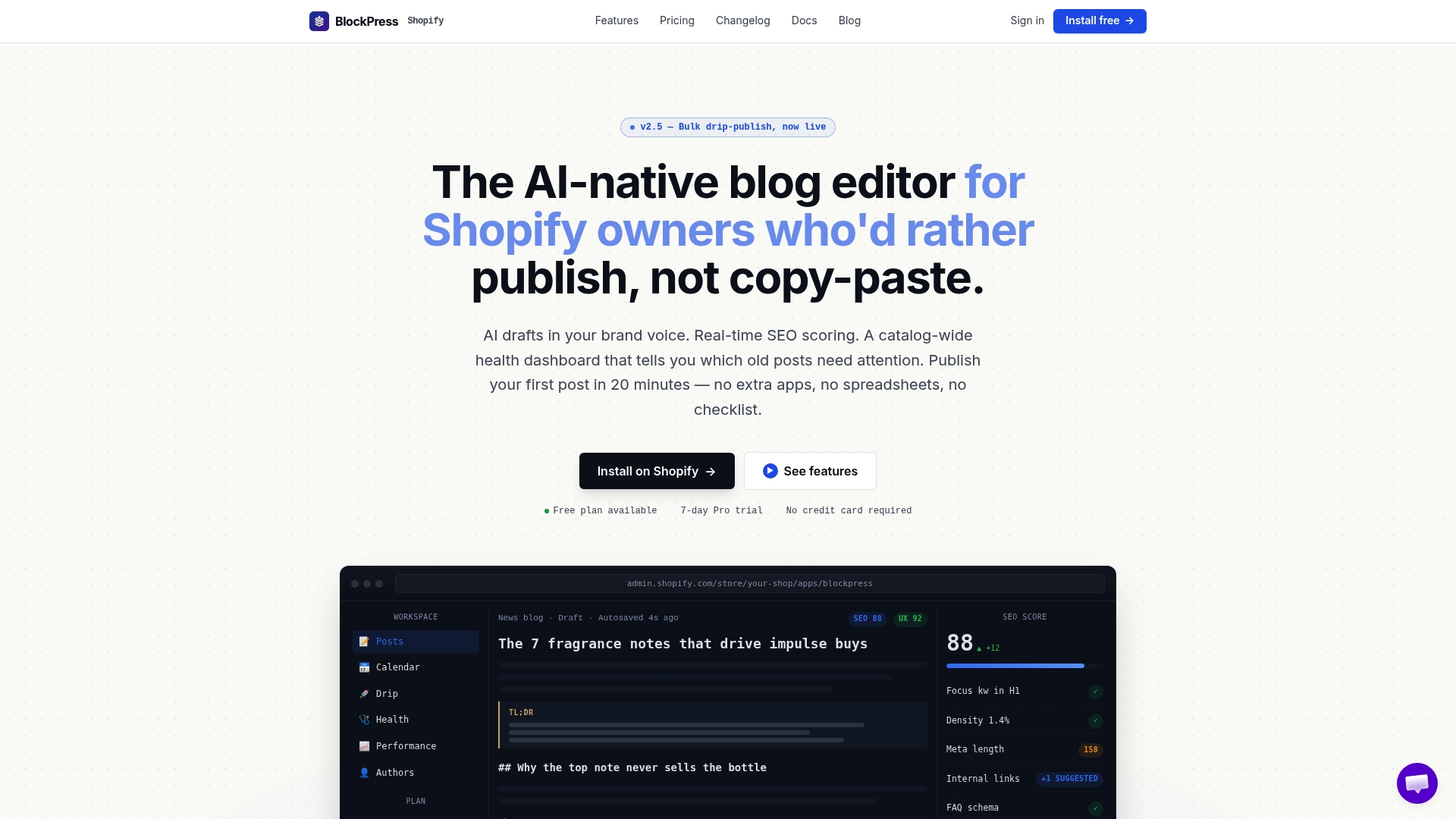
Blockpress is built directly into Shopify and includes author bio pages with structured data support, live SEO scoring, and per-article performance analytics. You can set up a complete author identity with Schema.org Person markup without touching a line of code. Every post you publish is automatically linked to a credible, machine-readable author profile. If you want to see exactly what Blockpress can do for your store's blog authority, explore the full feature set here.
FAQ
What are the main author credibility benefits for store blogs?
Author credibility improves Google E-E-A-T signals, increases user trust, drives higher conversion rates, and attracts quality backlinks. Stores with credible authorship see measurable gains in both organic traffic and on-site engagement.
How does Schema.org author markup help ecommerce blogs?
Schema.org Person markup with JSON-LD connects your blog content to a verifiable author identity that search engines and AI systems can read. Including sameAs links to social profiles makes the author entity machine-recognizable across the web.
Does author credibility directly affect sales?
Yes. Author trust signals increase conversion rates by up to 42% and reduce cart abandonment for ecommerce stores. Readers who trust your content author are more likely to trust your product recommendations.
What makes an author bio credible vs. generic?
A credible bio includes a specific credential, a verifiable connection to the content topic, and evidence within the article itself. Vague bios without auditable claims are flagged by Google's quality raters as low-trust signals.
How often should author pages be updated?
Author pages should be reviewed and updated at least twice a year. Adding new credentials, recent publications, and updated disclosure statements keeps the author entity current and maintains trust signals across algorithm updates.