
TL;DR:
- Featured snippets offer ecommerce brands prime visibility at position zero, shaping brand perception and influencing early customer decisions. By securing snippet ownership, stores build brand authority, increase qualified traffic, and enhance assisted conversions beyond direct clicks. Optimizing content with question headings, concise answers, and regular audits maximizes the strategic benefits of featured snippets.
Featured snippets are defined as position zero answer boxes that Google displays above all organic results, giving ecommerce brands a direct opportunity to own the most visible real estate on the search results page. Understanding why featured snippets matter for ecommerce goes beyond chasing clicks. These boxes shape how shoppers perceive your brand before they ever visit your store, and they influence purchase decisions at the earliest stage of the customer journey. With zero-click search behavior rising and AI-driven results reshaping Google's layout, snippet ownership has become one of the most strategic moves in ecommerce SEO.
Why featured snippets matter for ecommerce visibility and traffic
Featured snippets place your brand at the top of Google before any paid ad or organic result. For ecommerce stores, that means your product comparison, sizing guide, or care instruction content appears first when shoppers are actively researching. Shopify describes featured snippets as short answer boxes that help users get quick answers and previews, making them ideal for capturing early-stage informational and comparison searches.

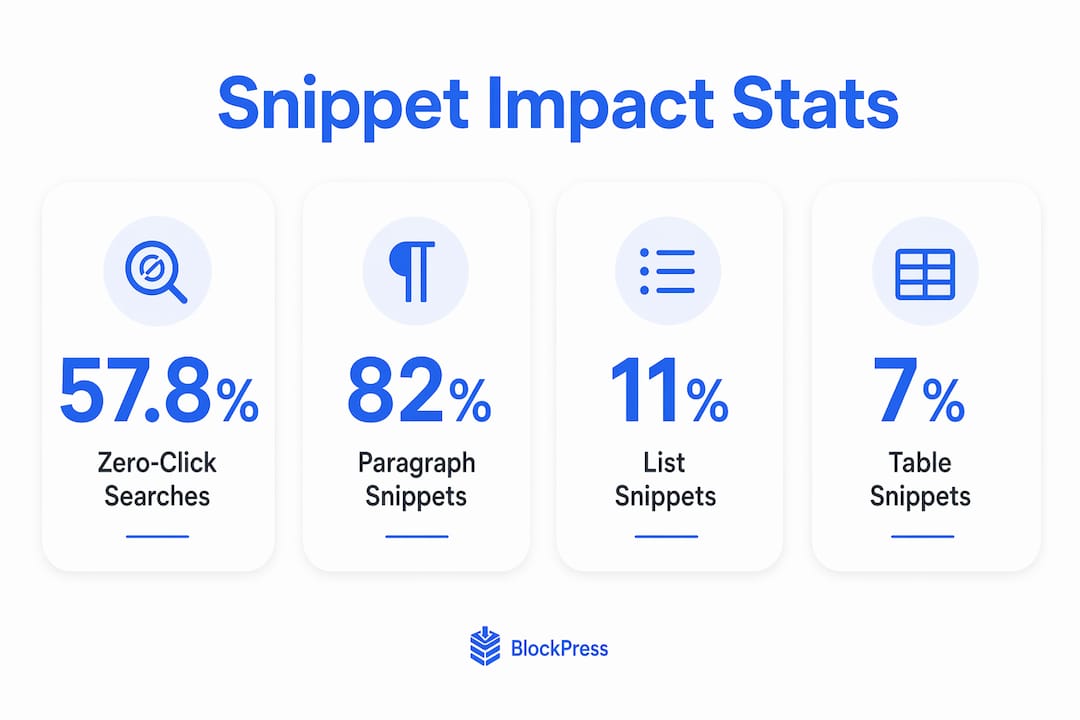
The zero-click reality changes how you should measure snippet value. 57.8% of Google searches in 2025 ended without a click to any website. That means nearly 6 in 10 queries never send traffic anywhere. For ecommerce marketers focused only on click-through rates, this looks alarming. But snippet visibility in a zero-click environment still delivers brand exposure to shoppers who are forming opinions and shortlisting stores.
When clicks do happen, snippets capture a significant share. Snippet-holding pages attract 35 to 40% of clicks for queries where they appear. Those visitors tend to be more qualified because they already saw a preview of your content and chose to learn more. The traffic is smaller in volume but higher in intent.
Here is what this means practically for your store:
- Zero-click impressions build brand recognition even when users do not visit your site
- High-intent clicks from snippet holders convert at better rates than average organic traffic
- Position zero prominence pushes competitors below the fold, reducing their visibility on your target queries
- Informational queries like "how to measure ring size" or "what is moisture-wicking fabric" are prime snippet targets for apparel and accessories stores
How snippets build brand authority beyond the click
Featured snippet exposure builds brand authority in a way that paid ads cannot replicate. When Google selects your content to answer a query, it signals to searchers that your store is a credible source. Repeated snippet visibility increases brand recall and makes users more likely to return and engage later in the customer journey, even if they did not click the first time.
The relationship between snippets and AI Overviews makes this even more relevant in 2026. Snippet-style content increases your chances of appearing in multiple SERP features, including AI-driven ones. Google's AI Overviews pull from the same structured, concise content that wins featured snippets. Optimizing for one effectively optimizes for both.
Here is how to think about the customer journey impact:
- A shopper searches "what thread count is best for hot sleepers" and sees your bedding store's snippet
- They do not click but remember your brand name
- Three days later, they search your store directly and convert
- Standard last-click attribution misses this entirely
Pro Tip: Set up assisted conversion tracking in Google Analytics 4 and segment by organic search channel. You will find snippet-driven brand searches appearing in multi-touch attribution paths that last-click models never credit.
Ecommerce brands gain more assisted conversions from snippet ownership despite some reduction in direct clicks. This makes snippet visibility valuable well beyond what traffic dashboards show.
What types of featured snippets work best for ecommerce content
Google serves three main snippet formats, and each maps to different ecommerce content types. Knowing which format to target helps you structure your blog posts and product guides more precisely.
| Snippet type | Best for ecommerce | Example query |
|---|---|---|
| Paragraph | Product definitions, material explanations | "What is Pima cotton?" |
| List | How-to guides, care instructions, step-by-step buying advice | "How to clean suede shoes" |
| Table | Product comparisons, size charts, spec breakdowns | "Wool vs. fleece jacket warmth" |
Paragraph snippets make up 82% of all featured snippets, with lists at 11% and tables at 7%. Typical snippet answers run 40 to 50 words. This means your content needs a tight, direct answer block before expanding into detail.
For ecommerce specifically, list snippets perform well for buying guides and product care content. Table snippets are powerful for comparison pages where shoppers are evaluating two or more products. Paragraph snippets suit any page that defines a product attribute or answers a "what is" question about your category.
Schema markup supports snippet eligibility without guaranteeing it. HowTo and FAQPage schema act as tiebreakers when Google is choosing between two well-structured pages. Adding schema to your Shopify blog posts and product guides is a low-effort step that improves your odds. You can find a full breakdown of technical requirements in this technical SEO guide for ecommerce blogs.
How to optimize ecommerce content for featured snippets
Winning a snippet requires a specific combination of content structure, query targeting, and domain authority. Follow these steps to build a repeatable process.
-
Target queries where you already rank in positions 2 through 5. Pages ranking in positions 2 to 5 with strong content structure are the best snippet targets. You have the authority. You just need better formatting.
-
Write question-format headings that match search intent exactly. Use the precise phrasing shoppers type. "How do I measure my inseam?" outperforms "Measuring Your Inseam" as a heading for snippet capture.
-
Place a 40 to 60 word direct answer immediately below each question heading. Write it as a standalone block. Google extracts this text directly, so it needs to make sense without surrounding context.
-
Add depth after the direct answer. Snippets reward concise answers, but the full page needs to be comprehensive enough to satisfy users who click through. Thin pages lose snippets quickly.
-
Monitor snippet volatility and audit regularly. Snippet ownership is volatile. Competitors rotate snippets by reformatting their content for better extractability. Review your snippet positions monthly and update answer blocks when you lose position.
-
Build domain authority alongside snippet optimization. Domain authority is a key factor in snippet acquisition. Ecommerce sites with lower authority scores should invest in link building at the same time as snippet targeting. One without the other produces slower results.
-
Add FAQ and HowTo schema to relevant pages. Schema does not guarantee a snippet, but it signals content structure clearly to Google and improves eligibility across multiple SERP features.
Pro Tip: Use Google Search Console's "Search results" report filtered by your target queries. Pages with high impressions but low clicks are often snippet candidates where better formatting can shift your position.
For a broader view of how Google evaluates your blog content, the ecommerce blog ranking guide covers the full set of signals that affect organic visibility.
Key takeaways
Featured snippets are a multi-touch brand asset for ecommerce stores, not just a traffic source, and optimizing for them requires structured content, query targeting, and consistent maintenance.
| Point | Details |
|---|---|
| Position zero visibility | Snippets appear above all organic results, giving your store maximum exposure on high-intent queries. |
| Zero-click brand building | 57.8% of searches end without a click, making snippet impressions a critical brand touchpoint. |
| Snippet click quality | Pages holding snippets capture 35 to 40% of clicks, and those visitors arrive with higher purchase intent. |
| Content format alignment | Match paragraph, list, or table formats to your specific ecommerce query types for better extraction. |
| Ongoing maintenance | Snippet positions are volatile and require monthly audits to defend against competitor reformatting. |
Snippets are not a traffic hack. They are a brand strategy.
I have worked with enough ecommerce stores to know that most teams treat featured snippets as a traffic tactic. They optimize one page, win a snippet, and move on. That approach misses the bigger picture entirely.
The stores that benefit most from snippet ownership are the ones that treat it as a brand visibility channel. They track assisted conversions, not just direct clicks. They audit snippet positions monthly because they know competitors are constantly reformatting content to steal position zero. And they write content that genuinely answers buyer questions, not content engineered purely to extract a snippet.
The AI Overview shift in 2026 makes this even more urgent. Google is pulling structured, authoritative answers into its AI-generated summaries, and the content that wins snippets is the same content that gets cited in those summaries. If your store is not producing clear, well-structured answers to the questions your customers are asking, you are invisible in both formats.
My honest advice: stop measuring snippet success by clicks alone. Measure it by brand search volume, assisted conversions, and impression share on your target queries. That is where the real value shows up.
— Rodney
Build snippet-ready content faster with Blockpress
If you are running a Shopify store and want to produce snippet-optimized blog content without juggling three separate apps, Blockpress is built for exactly that. Blockpress is an AI-native blog editor that lives inside Shopify and gives you real Google keyword data, live SEO scoring, and AI-generated article drafts structured for search visibility.
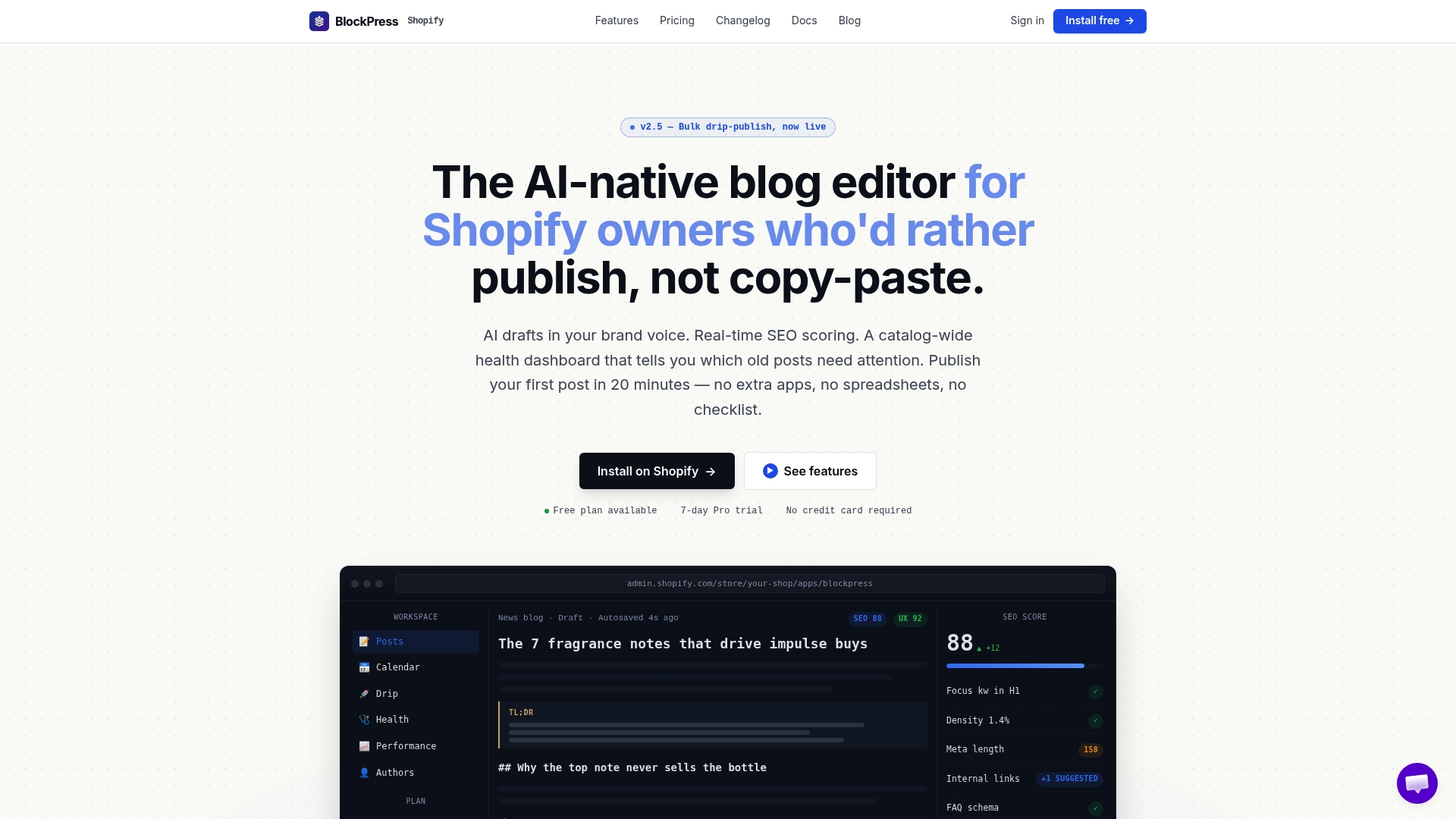
Every draft Blockpress generates follows the content structure that Google favors for featured snippets: question-format headings, concise answer blocks, and proper schema support. You also get per-article performance analytics so you can track which posts are earning snippet impressions and driving assisted conversions. See the full feature breakdown here to understand what it replaces in your current workflow.
FAQ
What are featured snippets in ecommerce SEO?
Featured snippets are answer boxes that Google displays above organic search results, showing concise content pulled from a webpage. For ecommerce stores, they appear for informational queries like product comparisons, care instructions, and buying guides.
Do featured snippets actually drive sales?
Featured snippets drive assisted conversions by building brand awareness during the research phase of the customer journey. Ecommerce brands gain more qualified clicks and stronger brand recall from snippet ownership, even when users do not click immediately.
How long should a featured snippet answer be?
The optimal snippet answer length is 40 to 60 words. Write a direct, standalone response immediately below a question-format heading so Google can extract it cleanly.
Which pages on my store should I optimize for snippets?
Target pages already ranking in positions 2 through 5 for queries with existing snippets. Blog posts covering buying guides, product comparisons, and how-to content are the strongest candidates for ecommerce stores.
How do AI Overviews affect featured snippet strategy?
Optimizing for featured snippets and AI Overviews requires the same approach: structured, concise, authoritative answers. Content that wins snippets is more likely to be cited in Google's AI-generated summaries, amplifying your organic visibility across both formats.