

TL;DR:
- Content marketing offers ecommerce stores a cost-effective way to attract, convert, and retain customers while reducing acquisition costs. Consistent content creation boosts organic traffic, builds authority over time, and improves conversion rates through targeted guides, comparisons, and personalized emails. Treating content as a long-term asset with fixed procedures and ownership drives sustained growth and better attribution.
Content marketing is the most cost-effective growth channel available to ecommerce businesses. It costs 62% less than traditional outbound marketing and generates approximately three times more leads per dollar spent. That cost advantage compounds: consistent content investment reduces customer acquisition cost by an estimated 30–50% over three years. The role of content in ecommerce growth goes well beyond brand awareness. Content attracts qualified shoppers, converts browsers into buyers, and keeps existing customers coming back. This article breaks down exactly how that works and what you need to do about it.
How does content drive ecommerce growth and brand authority?
Organic search is the single largest source of free, qualified traffic for most online stores. Organic search drives 27–45% of ecommerce traffic, depending on the store and category. That means nearly half your potential customers find you through search before they ever see a paid ad.

Blog posts targeting buyer-intent keywords are the most direct way to capture that traffic. A post titled "best running shoes for flat feet" attracts a shopper who is close to buying, not just browsing. That specificity is what separates content that earns revenue from content that earns page views.
Content also compounds in a way paid ads cannot. A well-ranked article keeps delivering traffic months or years after you publish it. A paid ad stops the moment you stop funding it. That compounding effect is why content builds authority over time while ad spend resets to zero every billing cycle.
Several content formats build traffic and trust simultaneously:
- SEO blog posts targeting buyer-intent and comparison keywords attract shoppers at the decision stage.
- User-generated content (UGC) such as customer reviews and photos increases purchase likelihood by 79%. Shoppers trust other shoppers.
- Video content achieves 89% higher conversion rates than static images. A 60-second product demo answers questions faster than three paragraphs of copy.
- Social proof content like case studies and before-and-after results reduces purchase hesitation at scale.
To grow organic traffic consistently, you need a publishing cadence, not a one-time campaign.
What types of content convert ecommerce visitors into buyers?
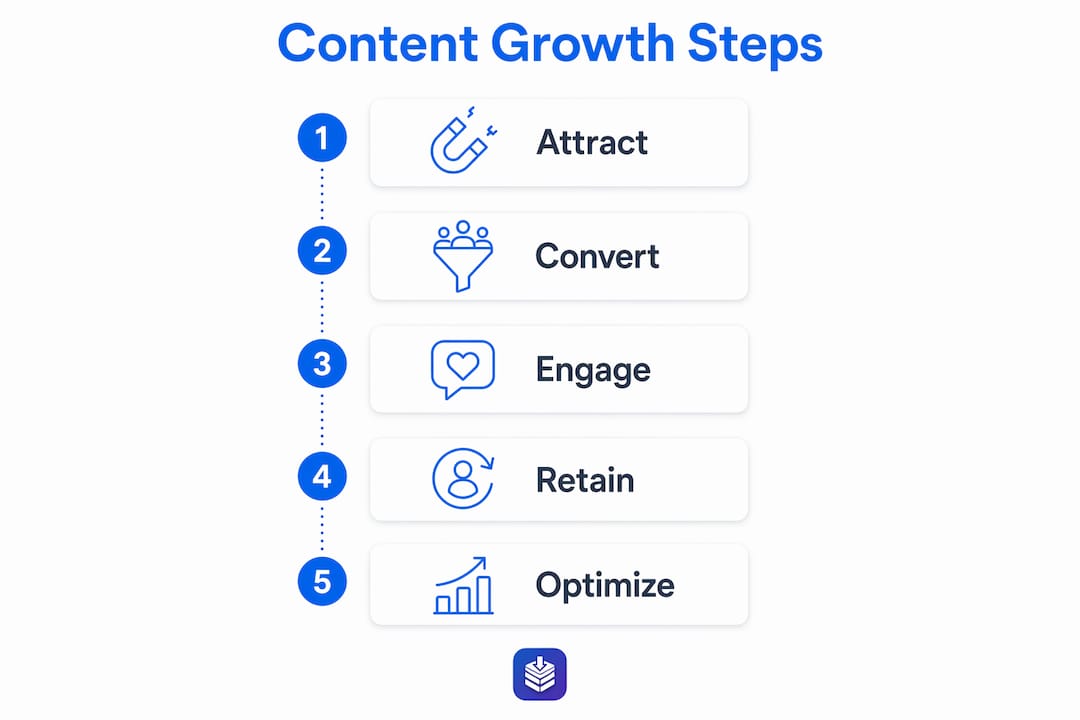
Traffic without conversion is just a vanity metric. The content formats that convert best are the ones that remove friction from the buying decision.
Buying guides, product comparisons, and detailed FAQs function as a virtual sales assistant addressing objections before a shopper ever reaches checkout. A well-written comparison page between two products in your catalog can increase conversion rates two to five times compared to a bare product listing. The shopper gets the answer they need without leaving your store.
Product descriptions are underrated conversion tools. Most stores treat them as a formality. The stores that write descriptions addressing specific use cases, sizing concerns, and material questions see measurably lower return rates and higher add-to-cart rates. Think of your product page as a conversation, not a spec sheet.
Email sequences are where content turns directly into revenue. Abandoned cart emails earn $28.89 per recipient on average. Personalized email sequences generate 760% higher revenue than generic broadcast emails. Those numbers reflect the power of sending the right message to the right person at the right moment.
Here are the highest-converting content formats for ecommerce:
- Buying guides that match product features to specific customer needs
- Product comparison pages that help shoppers choose between options in your catalog
- FAQ content embedded on product pages to address common objections
- Abandoned cart email flows with specific product reminders and urgency cues
- Personalized post-browse email sequences based on what a shopper viewed
Pro Tip: Multi-touch attribution models show that content assists up to 40% more revenue than last-click data suggests. If you are measuring content ROI only by direct conversions, you are undervaluing it significantly.
You can also explore AI in ecommerce to see how stores are using automated content tools to scale these conversion formats without adding headcount.
How does content improve post-purchase engagement and retention?
The sale is not the finish line. The content you send after a purchase determines whether a customer buys again or disappears.
Post-purchase email sequences are the highest-ROI retention tool available. A sequence that teaches a customer how to use their new product, suggests complementary items, and prompts a review at the right moment increases customer lifetime value without any additional ad spend. Email nurtures existing customers in a way no paid channel can replicate at the same cost.
Use-case videos and care guides reduce returns. When a customer knows exactly how to use, clean, or assemble a product, they are less likely to feel disappointed and more likely to leave a positive review. That review then becomes UGC that converts the next shopper.
Pro Tip: Send a personalized content sequence 7 days after purchase that includes a how-to guide, a complementary product suggestion, and a review request. This single flow can lift repeat purchase rates without any paid media.
Retention content also reduces your overall marketing spend. Acquiring a new customer costs significantly more than selling to an existing one. Content that keeps customers engaged and informed after the sale is one of the most cost-efficient investments you can make.
What operational strategies make ecommerce content work long-term?
Content marketing fails when it is treated as a campaign. It works when it is treated as an operations function with fixed processes, clear ownership, and measurable outputs.
The most effective approach is to concentrate on three core formats: buyer-intent SEO blog posts, product education emails, and short-form social proof content. Stores that publish these three formats on a consistent weekly schedule see measurable growth. Stores that scatter effort across ten formats with no cadence see very little.
Here is a practical weekly content system for ecommerce stores:
- Publish one SEO blog post targeting a buyer-intent or comparison keyword relevant to your catalog.
- Send one email to a segmented list, either educational or retention-focused, not promotional.
- Collect and publish one piece of UGC, whether a review, photo, or customer story.
- Review one existing post for content decay. Refreshing existing assets often recovers traffic faster than writing new content.
Content decay is a real and underestimated problem. A post that ranked well 18 months ago may have lost ground to newer, more detailed competitors. A structured audit and refresh cycle keeps your existing content earning its keep.
Clear ownership matters as much as cadence. Assign one person or tool to each content type. When everyone is responsible, no one is. When one person owns the SEO blog and another owns email, both get done consistently.
Integrating AI tools into your content workflow is the most practical way to scale without adding staff. AI-drafted blog posts can cut production time significantly while maintaining quality when you use the right editorial process.
Key Takeaways
Content marketing drives ecommerce growth by reducing acquisition costs, compounding organic traffic, and converting and retaining customers at a fraction of the cost of paid channels.
| Point | Details |
|---|---|
| Content cuts acquisition costs | Consistent content investment reduces customer acquisition cost by 30–50% over three years. |
| Organic search is your biggest free channel | SEO-driven content captures 27–45% of ecommerce traffic without ongoing ad spend. |
| Email is your highest-ROI content asset | Abandoned cart emails earn $28.89 per recipient; personalized sequences generate 760% more revenue than generic sends. |
| Retention content reduces marketing spend | Post-purchase sequences increase lifetime value and repeat purchases without paid media. |
| Cadence and ownership drive results | A fixed weekly system with three core formats outperforms scattered, high-volume content efforts. |
Content is a long-term asset, not a campaign
Most ecommerce owners I talk to treat content like a paid ad. They publish a few posts, see no immediate spike in revenue, and conclude it does not work. That conclusion is wrong, and it costs them.
Content compounds slowly. The blog post you publish this month may not rank for six weeks. The email sequence you build this quarter may not show its full retention impact for three months. That lag is not a failure. It is how the asset class works.
The mistake I see most often is chasing too many formats at once. Store owners read that they need TikTok, Pinterest, a podcast, a blog, and a newsletter. They start all five, sustain none, and wonder why results are flat. Pick two or three formats, own them completely, and measure them properly.
Attribution is where most stores leave money on the table. If you are only measuring last-click conversions, you are crediting paid ads for sales that content assisted. Multi-touch attribution shows the full picture. Run it for one quarter and you will likely find that your blog and email sequences are doing far more work than your reporting suggests.
Content is not a marketing tactic. It is a business asset that grows in value the longer you invest in it.
— Rodney
Blockpress makes ecommerce content publishing consistent
Running a Shopify store and maintaining a weekly content calendar is genuinely hard without the right system in place.
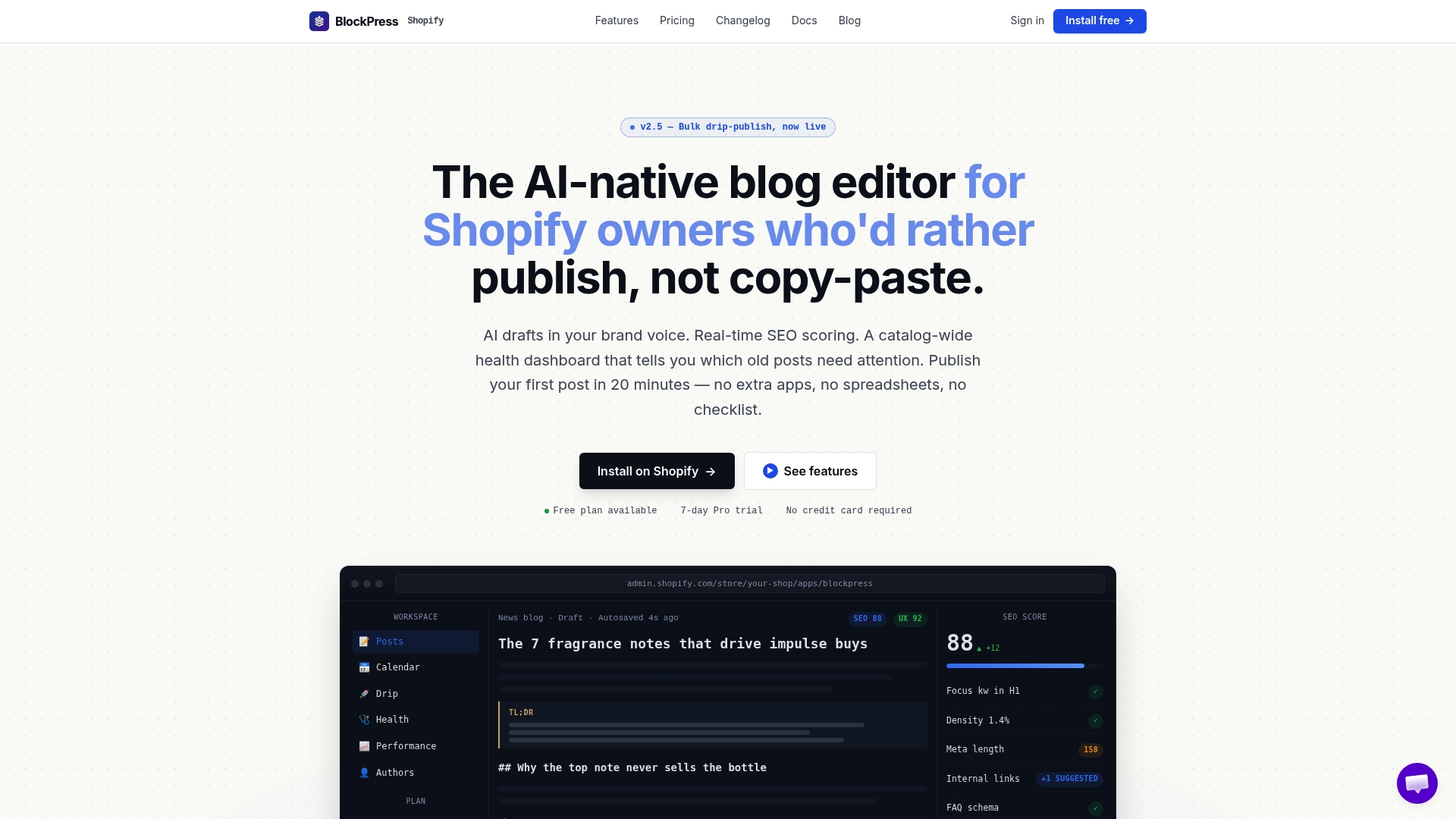
Blockpress is an AI-native blog editor built directly into Shopify. It gives you real Google keyword data, live SEO scoring, AI-generated article drafts, and per-article performance analytics, all without leaving your store. You can plan, write, and publish buyer-intent blog posts in a fraction of the time it takes with a standard editor. Blockpress also includes bulk drip-publishing and article health audits, so your content cadence stays consistent and your existing posts stay ranked. If you are ready to treat content as a growth function rather than an afterthought, start with Blockpress and see what a proper content system looks like inside Shopify.
FAQ
What is the role of content in ecommerce growth?
Content attracts qualified organic traffic, converts visitors by addressing purchase objections, and retains customers through post-sale education. It costs 62% less than paid marketing and compounds in value over time.
How does content marketing reduce customer acquisition costs?
Consistent content investment reduces customer acquisition cost by an estimated 30–50% over three years by generating organic traffic and leads that do not require ongoing ad spend.
What content format has the highest conversion rate for ecommerce?
Video content achieves 89% higher conversion rates than static images, and personalized email sequences generate 760% more revenue than generic emails, making both top-performing formats.
How often should an ecommerce store publish content?
A fixed weekly cadence covering one SEO blog post, one email, and one piece of UGC is the minimum effective system. Consistency outperforms volume every time.
Why does content decay matter for ecommerce SEO?
Content decay causes previously ranked pages to lose traffic as competitors publish fresher, more detailed content. Refreshing existing posts regularly recovers rankings faster than publishing new content alone.